 EN
EN

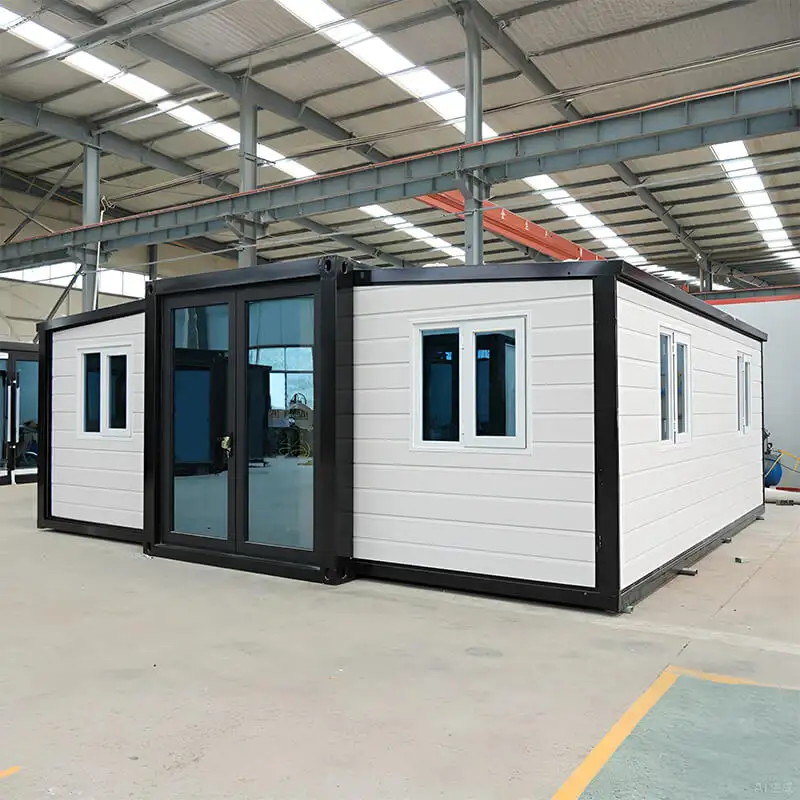
Modern living demands flexibility and adaptability like never before. As urban landscapes evolve and housing costs continue to rise, innovative construction solutions are emerging to meet the changing needs of contemporary homeowners and businesses. Among these revolutionary approaches, the concept of modular and portable housing has gained significant traction, offering unprecedented mobility and convenience for those seeking alternative living arrangements.
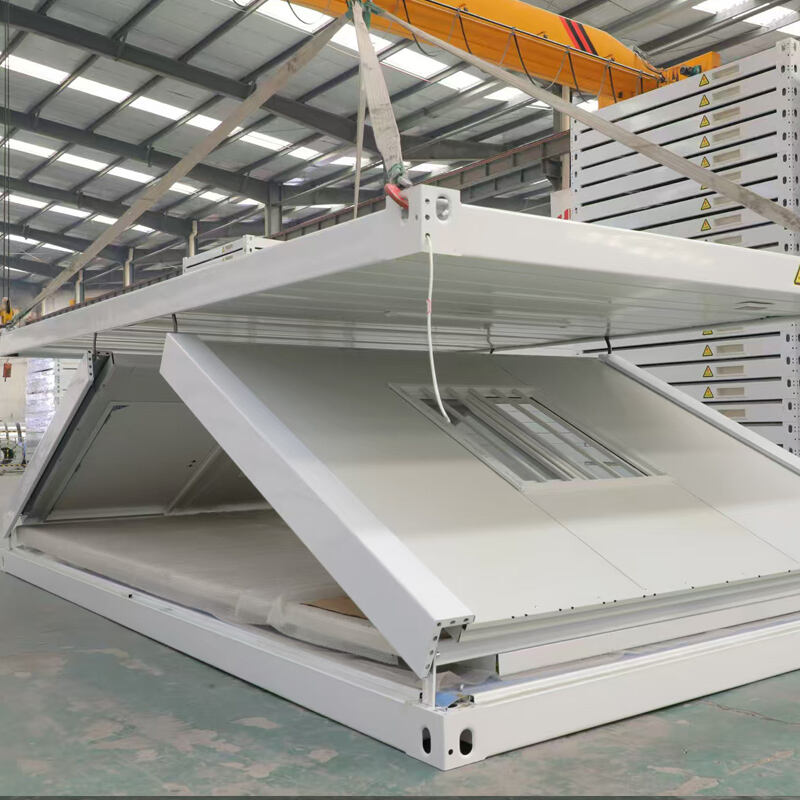
Understanding the Foldable Housing Revolution
The Evolution of Portable Architecture
The architectural landscape has witnessed a remarkable transformation over the past decade, with portable and modular structures leading the charge toward more flexible living solutions. Traditional construction methods, while reliable, often lack the adaptability required for modern lifestyles characterized by frequent relocations and changing space requirements. This shift has paved the way for innovative housing concepts that prioritize mobility without compromising on comfort or functionality.
Engineers and architects have collaborated to develop sophisticated folding mechanisms that allow entire structures to be collapsed, transported, and reassembled with minimal effort. These advancements represent a significant departure from conventional building practices, incorporating aerospace-grade materials and precision engineering to create homes that can be deployed rapidly in various environments. The technology behind these structures draws inspiration from military applications, where quick deployment and portability are essential operational requirements.
Key Design Principles and Innovation
The foundation of any successful foldable house lies in its ingenious design principles that balance structural integrity with maximum portability. Advanced hinge systems, telescoping components, and modular panels work in harmony to create structures that can transform from compact transport configurations to fully functional living spaces. These design elements must withstand repeated folding and unfolding cycles while maintaining weatherproofing and insulation properties.
Material selection plays a crucial role in achieving optimal performance, with manufacturers utilizing lightweight yet durable composites, aluminum alloys, and high-strength polymers. These materials provide the necessary strength-to-weight ratios while resisting corrosion and environmental degradation. The integration of smart locking mechanisms ensures structural stability once deployed, while specialized sealing systems maintain interior climate control and prevent moisture infiltration.
Practical Applications and Use Cases
Emergency and Disaster Relief Housing
One of the most compelling applications for foldable housing technology lies in emergency response and disaster relief scenarios. When natural disasters strike, traditional housing infrastructure is often damaged or destroyed, leaving communities without adequate shelter. The rapid deployment capability of these structures makes them invaluable for providing immediate housing solutions in crisis situations where time is of the essence.
Relief organizations worldwide have recognized the potential of portable housing systems to address humanitarian crises effectively. These structures can be transported via standard shipping containers and deployed by small teams with minimal equipment, making them ideal for remote locations where traditional construction resources are unavailable. The ability to establish temporary communities quickly helps maintain social cohesion during recovery periods while providing dignified living conditions for displaced populations.
Commercial and Industrial Applications
Beyond residential use, foldable housing technology has found significant applications in commercial and industrial sectors. Mining companies operating in remote locations utilize these structures to provide comfortable accommodations for workers without the need for permanent infrastructure investment. The mobility factor allows companies to relocate entire housing complexes as operations shift to new sites, maximizing resource utilization while minimizing environmental impact.
Construction companies have also embraced this technology for temporary site offices and worker accommodation during large projects. The ability to establish professional office environments quickly enhances project efficiency while providing comfortable living spaces for crews working on extended assignments. Educational institutions use these structures for temporary classrooms during renovation projects or to accommodate enrollment spikes without committing to permanent expansion.
Economic Advantages and Cost Considerations
Initial Investment and Long-term Value
The economic proposition of foldable house technology extends beyond simple purchase price comparisons with traditional construction methods. While the initial investment may appear higher than conventional building approaches, the total cost of ownership often favors portable solutions when considering factors such as land acquisition, foundation requirements, and utility connections. The ability to relocate structures eliminates the need for multiple property purchases when housing needs change.
Depreciation patterns for these structures differ significantly from traditional real estate, with well-maintained units retaining substantial value due to their continued utility across multiple applications. The modular nature of many systems allows for incremental expansion or downsizing based on changing requirements, providing financial flexibility that fixed structures cannot match. Additionally, reduced construction timelines translate to lower labor costs and faster occupancy, improving return on investment calculations.
Operational Efficiency and Maintenance
Operational costs associated with foldable house systems often prove more predictable than traditional housing due to standardized components and simplified maintenance procedures. Manufacturing economies of scale result in readily available replacement parts and standardized service protocols, reducing both maintenance costs and downtime. The controlled factory environment where these structures are produced typically results in higher quality control standards compared to on-site construction.
Energy efficiency considerations play an increasingly important role in operational cost calculations, with modern foldable house designs incorporating advanced insulation systems and energy-efficient appliances. The compact size of many units naturally reduces heating and cooling requirements, while optional solar panel integration can achieve near-zero energy consumption in suitable climates. These efficiency gains compound over time, resulting in significant operational savings compared to larger traditional structures.
Technical Specifications and Performance
Structural Integrity and Safety Standards
Contemporary foldable house designs must meet rigorous safety and structural standards equivalent to traditional construction methods. Engineering analysis includes comprehensive stress testing under various load conditions, seismic evaluation, and wind resistance calculations to ensure occupant safety across diverse environmental conditions. Advanced computer modeling techniques allow designers to optimize structural elements while minimizing weight and complexity.
Building code compliance represents a critical consideration for foldable house implementations, with manufacturers working closely with regulatory bodies to establish appropriate standards for these innovative structures. Fire safety systems, electrical installations, and plumbing connections must all function reliably despite the folding mechanisms, requiring specialized design approaches and component selection. Third-party certification processes validate performance claims and provide assurance to end users and regulatory authorities.
Environmental Performance and Sustainability
Environmental considerations increasingly influence housing decisions, with foldable house technology offering several sustainability advantages over traditional construction methods. The factory-based production process typically generates less waste than on-site construction, while the ability to relocate structures reduces the need for demolition and new construction cycles. Material selection emphasizes recyclability and low environmental impact throughout the product lifecycle.
Carbon footprint analysis reveals significant advantages for portable housing in many applications, particularly when considering the reduced foundation requirements and minimal site preparation needed for deployment. The option to power these structures entirely through renewable energy sources further enhances their environmental credentials, making them attractive options for environmentally conscious consumers and organizations seeking to reduce their ecological impact.
Future Trends and Market Outlook
Technological Advancement and Innovation
The future of foldable house technology promises continued innovation driven by advances in materials science, automation, and smart home integration. Emerging materials such as shape-memory alloys and advanced composites will enable even more compact folding configurations while maintaining structural performance. Automated deployment systems are under development that could eliminate the need for manual assembly, reducing setup times and labor requirements significantly.
Integration with Internet of Things technology will enable remote monitoring and control of environmental systems, security features, and structural health monitoring. These capabilities will prove particularly valuable for remote applications where on-site maintenance personnel are not readily available. Artificial intelligence systems may eventually optimize folding sequences and predict maintenance requirements based on usage patterns and environmental conditions.
Market Expansion and Adoption Trends
Market adoption of foldable house technology continues to accelerate across multiple sectors, driven by increasing recognition of the practical and economic advantages these structures offer. Government agencies are beginning to specify portable housing solutions for various applications, from military deployments to emergency response preparedness programs. This institutional adoption provides market validation and encourages further private sector investment in technology development.
International market expansion represents a significant growth opportunity, particularly in regions experiencing rapid urbanization or frequent natural disasters. The standardized nature of these products facilitates international shipping and deployment, while local assembly capabilities can be developed to support regional markets. As production volumes increase, economies of scale will drive down costs and improve accessibility for a broader range of applications.
FAQ
How long does it take to set up a foldable house?
The setup time for a foldable house varies depending on the size and complexity of the structure, but most residential units can be fully deployed by a small team in 2-4 hours. Larger commercial structures may require 6-8 hours for complete assembly. The process involves unfolding the main structure, securing locking mechanisms, connecting utilities, and performing final safety checks. Some advanced models feature semi-automated deployment systems that can reduce setup time significantly.
What is the lifespan of a foldable house?
Well-maintained foldable house structures typically have a service life of 15-25 years, depending on usage frequency and environmental conditions. The folding mechanisms are designed to withstand thousands of deployment cycles, while the structural components are built to the same durability standards as traditional construction. Regular maintenance of hinges, seals, and mechanical components can extend service life significantly. Many manufacturers offer warranty programs covering structural integrity for 10-15 years.
Are foldable houses suitable for permanent residential use?
Modern foldable house designs are fully suitable for permanent residential use, offering the same comfort and functionality as traditional homes. They include complete kitchen and bathroom facilities, climate control systems, and adequate insulation for year-round occupancy. Many models can be connected to standard utilities or operate off-grid with renewable energy systems. The key consideration is ensuring compliance with local building codes and zoning regulations for permanent installations.
What maintenance is required for foldable house systems?
Routine maintenance for foldable house systems includes regular inspection and lubrication of folding mechanisms, checking and replacing weatherstripping seals, and monitoring structural connections for wear. Annual professional inspections are recommended to ensure all systems remain in proper working order. The modular design typically allows for easy component replacement when needed. Most maintenance tasks can be performed by the owner with basic tools and training, though specialized components may require professional service.